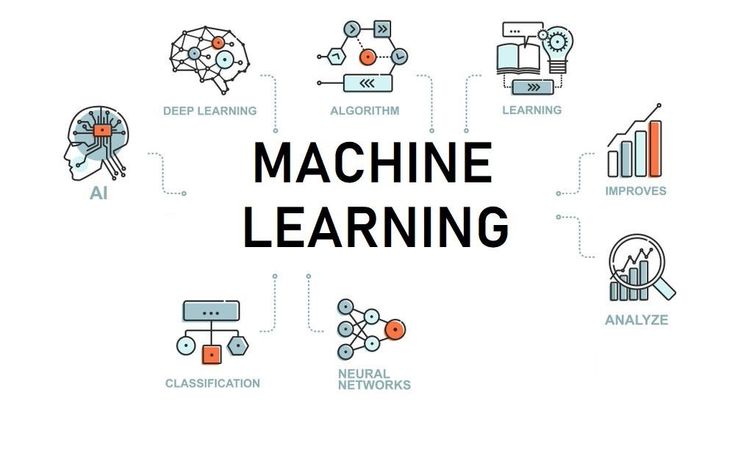
In today’s rapidly evolving digital world, Machine Learning has become one of the most important technologies driving innovation across industries. From personalized recommendations on streaming platforms to self-driving vehicles and intelligent chatbots, machine learning is transforming the way businesses operate and people interact with technology.
As organizations continue to adopt Artificial Intelligence and Machine Learning solutions, the demand for skilled professionals is growing significantly. For students, job seekers, and technology enthusiasts, understanding machine learning is no longer optional—it’s becoming a valuable skill for future career growth.
This beginner-friendly guide will help you understand what machine learning is, how it works, its applications, benefits, and the exciting Machine Learning Career Opportunities available in 2026.
What is Machine Learning?
Machine Learning (ML) is a branch of Artificial Intelligence (AI) that enables computers to learn from data and improve their performance without being explicitly programmed for every task.
Instead of following fixed instructions, machine learning systems analyze large amounts of data, identify patterns, and make predictions or decisions based on those patterns.
For example:
- Netflix recommends movies based on your viewing history.
- Amazon suggests products you may want to buy.
- Email services automatically filter spam messages.
- Banking systems detect suspicious transactions.
These systems use machine learning algorithms to continuously improve their accuracy over time.
Simply put, machine learning allows computers to learn from experience, similar to how humans learn from observations and practice.
Understanding Artificial Intelligence and Machine Learning
Many beginners often confuse AI and ML. While they are closely related, they are not exactly the same.
Artificial Intelligence (AI)
Artificial Intelligence refers to the broader concept of machines performing tasks that normally require human intelligence, such as reasoning, problem-solving, and decision-making.
Machine Learning (ML)
Machine Learning is a subset of AI that focuses on enabling machines to learn from data.
Think of it this way:
- AI is the entire universe.
- Machine Learning is one important planet within that universe.
Today, most modern AI applications rely heavily on Artificial Intelligence and Machine Learning technologies working together.
How Does Machine Learning Work?
Machine learning follows a systematic process:
1. Data Collection
The first step is gathering relevant data.
Examples include:
- Customer purchase history
- Medical records
- Website traffic data
- Sensor readings
- Images and videos
The quality of data directly impacts the effectiveness of the machine learning model.
2. Data Preparation
Raw data often contains errors or missing information.
Data scientists clean and organize the data before using it for training.
3. Model Training
The machine learning algorithm studies the data and learns patterns.
For example, if thousands of images of cats and dogs are provided, the model learns to distinguish between them.
4. Testing and Validation
The trained model is tested using new data to measure its accuracy.
5. Prediction
Once validated, the model can make predictions or decisions based on new information.
Types of Machine Learning
There are three major categories of machine learning.
1. Supervised Learning
In supervised learning, the algorithm learns from labeled data.
Examples:
- Email spam detection
- House price prediction
- Credit risk assessment
The model already knows the correct answers during training.
2. Unsupervised Learning
In unsupervised learning, the algorithm analyzes unlabeled data and identifies hidden patterns.
Examples:
- Customer segmentation
- Market basket analysis
- Pattern discovery
The system finds relationships without predefined outcomes.
3. Reinforcement Learning
Reinforcement learning teaches machines through rewards and penalties.
Examples:
- Robotics
- Autonomous vehicles
- Gaming AI
The system continuously learns by interacting with its environment.
Why Machine Learning Matters in 2026
The adoption of machine learning is accelerating faster than ever.
Several factors are contributing to its growth:
Data Explosion
Every day, businesses generate enormous amounts of data that require intelligent analysis.
Automation Demand
Organizations seek automation solutions to improve efficiency and reduce operational costs.
Advanced Computing Power
Modern cloud platforms provide affordable computing resources for machine learning projects.
Competitive Advantage
Businesses using machine learning gain deeper insights into customer behavior and market trends.
As a result, machine learning has become a strategic priority across industries worldwide.
Real-World Applications of Machine Learning
Machine learning is already impacting nearly every sector.
Healthcare
Machine learning helps:
- Diagnose diseases
- Analyze medical images
- Predict patient outcomes
- Discover new drugs
Healthcare organizations are leveraging AI to improve treatment accuracy and patient care.
Finance
Financial institutions use machine learning for:
- Fraud detection
- Credit scoring
- Risk assessment
- Investment forecasting
These systems improve security and decision-making.
Retail and E-Commerce
Retail companies use machine learning to:
- Recommend products
- Predict customer preferences
- Manage inventory
- Personalize shopping experiences
Education
Educational platforms utilize machine learning for:
- Personalized learning paths
- Student performance analysis
- Automated assessments
- Intelligent tutoring systems
Manufacturing
Machine learning supports:
- Predictive maintenance
- Quality control
- Production optimization
- Supply chain management
Transportation
Applications include:
- Route optimization
- Traffic prediction
- Autonomous vehicles
- Fleet management
Machine learning is making transportation safer and more efficient.
Benefits of Learning Machine Learning
Enrolling in a Machine Learning Course offers numerous advantages.
High Demand Skills
Machine learning skills are among the most sought-after technical competencies in 2026.
Strong Salary Potential
Machine learning professionals often receive competitive compensation packages due to the growing demand.
Career Flexibility
Machine learning expertise can be applied across various industries including healthcare, finance, technology, education, and manufacturing.

Innovation Opportunities
Professionals can work on cutting-edge technologies that shape the future.
Global Career Prospects
Machine learning expertise is recognized and valued worldwide.
Machine Learning for Beginners: Where to Start?
If you are new to machine learning, follow these steps.
Learn Basic Mathematics
Focus on:
- Statistics
- Probability
- Linear Algebra
These concepts form the foundation of machine learning.
Develop Programming Skills
Python remains the most popular programming language for machine learning.
Popular libraries include:
- NumPy
- Pandas
- Scikit-learn
- TensorFlow
- PyTorch
Understand Data Analysis
Learning how to collect, clean, and analyze data is essential.
Work on Projects
Practical experience is crucial.
Begin with projects such as:
- Movie recommendation systems
- Spam email classifiers
- Sales forecasting models
- Customer segmentation
Enroll in a Machine Learning Course
A structured Machine Learning Course helps beginners gain theoretical knowledge and practical experience while working on real-world applications.
Essential Skills for Machine Learning Professionals
To succeed in machine learning, professionals should develop a combination of technical and analytical skills.
Programming
Strong coding skills help build and deploy machine learning models.
Mathematics
Understanding mathematical concepts improves model performance and interpretation.
Data Handling
Professionals must know how to manage and process large datasets.
Problem-Solving
Machine learning requires identifying solutions to complex business challenges.
Communication
Explaining technical findings to non-technical stakeholders is an important skill.
Machine Learning Career Opportunities in 2026
One of the biggest reasons students choose machine learning is the abundance of career opportunities.
Popular job roles include:
Machine Learning Engineer
Designs and develops machine learning systems and applications.
Data Scientist
Analyzes large datasets to generate actionable insights.
AI Engineer
Builds intelligent systems powered by Artificial Intelligence and Machine Learning.
Data Analyst
Transforms raw data into meaningful business intelligence.
Business Intelligence Analyst
Uses machine learning insights to support strategic decision-making.
Robotics Engineer
Develops intelligent robotic systems using machine learning technologies.
Research Scientist
Creates innovative algorithms and advanced machine learning solutions.
The growing adoption of AI across industries continues to expand Machine Learning Career Opportunities globally.
Future Trends in Machine Learning
Machine learning is expected to evolve significantly over the coming years.
Key trends include:
Generative AI
AI systems capable of creating text, images, videos, and code are becoming mainstream.
Explainable AI
Organizations increasingly demand transparent and interpretable machine learning models.
Edge AI
Machine learning models are moving closer to devices, enabling faster processing and reduced latency.
AI-Powered Cybersecurity
Machine learning is strengthening threat detection and cybersecurity defenses.
Intelligent Robotics
Advanced robotics systems will become more autonomous and capable.
These developments will further increase demand for machine learning professionals.
Conclusion
Machine learning has emerged as one of the most transformative technologies of the modern era. From healthcare and finance to education and transportation, machine learning is revolutionizing industries and creating new possibilities for innovation.
For anyone interested in technology, now is the perfect time to start learning. Whether you choose a professional Machine Learning Course, explore Machine Learning for Beginners resources, or pursue a career in Artificial Intelligence and Machine Learning, the opportunities are immense.
As businesses continue investing in AI-driven solutions, Machine Learning Career Opportunities will grow even further in 2026 and beyond. By developing the right skills today, you can position yourself for success in one of the world’s fastest-growing and most exciting fields.