The Robots Aren’t Coming. They’re Already Here.
A restaurant in Chicago has a robot that assembles burgers. A warehouse outside Amsterdam has robots that process 1,200 orders per hour without touching a single product. There is a semiconductor fab in Taiwan that has robotic systems that can perform quality inspections that are beyond the ability of a human.
If you are still picturing factory floors that have robotic arms welding parts together, we feel bad for you. We are currently experiencing the fastest transformation in history and it is crossing every industry and every continent.
The 2026 robotics market is at 38 Billion and growing at a rate of 34%. This is the fastest growth the industry has had in the last decade. This is not a passing trend, this is a permanent change.
Rapidai360 will break down the current state of robotics in 2026 in this blog. We will cover the numbers for this boom, the technologies that are driving it, and the sectors it is changing. We will include the challenges that are still present and the implications for workers and businesses.
The Problem This Revolution Is Solving
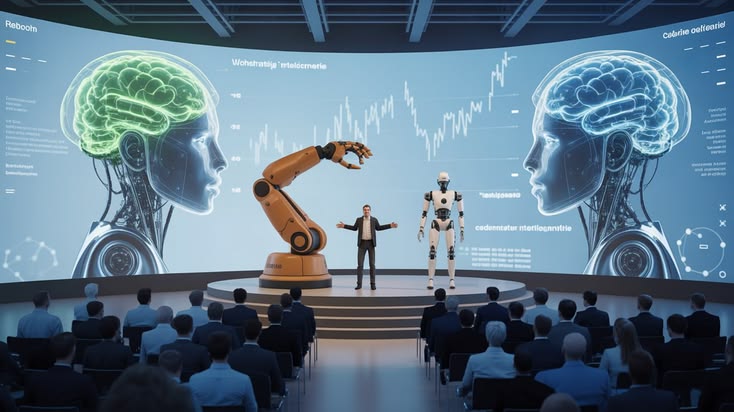
Robotics in 2026 is solving problems rather than creating things for the sake of innovation. We will be honest about the problems driving this transformation before we celebrate the technology.
– Labor shortages: Across numerous sectors like manufacturing, logistics, and even in healthcare and agriculture, employers are struggling to recruit and fill vacant positions. The employment of robotics and automation is becoming the only solution that makes sense.
– Supply chain fragility: The worldwide disruptions of the early 2020s demonstrated the risks of overly reliant, globally distributed, and concentrated supply chains. Robotic automation allows manufacturers to make a case for near shoring.
– Rising operational costs: Labor costs along with the costs of energy and materials are on the rise. Because robots can work around the clock, do not require benefits, and increase their capabilities without the need for increased compensation, they effectively counterbalance these rising costs.
– Quality and precision demands: Robots are the only solution in most use cases for manufacturing of advanced electronics, pharmaceuticals, and especially semiconductors where the tolerances for human error are simply not adequate.
These are not temporary problems. They are structural, and they are redefining the economics of industries with a level of disruption that will cause the adoption of robotics to accelerate even further.
New deployments using Vision-Language-Action AI models
Part One: The Five Forces Driving Robotics in 2026
Force 1: Robots Now have the Ability to Think
For a long time, robots had a high level of precision, but because they could only be programmed to do a single, very specific task, they lacked flexibility. Modern AI has left this paradigm behind and transformed the way we think of robotics.
The International Federation of Robotics outlines three categories of AI fueling the present robotics revolution. The first is Analytical AI. This type of AI can analyze data and help implement decisions, which can be helpful for predictive maintenance for smart factories, and for dynamic path planning in logistic operations. The second is Generative AI. This type of AI is changing systems from rule-based automation to self-evolving automation. The third, and the most interesting type of AI, is Agentic AI. This type of AI combines both of the previously mentioned types of AI, and is capable of making decisions in unstructured situations.
The most impactful is probably the use of Vision-Language-Action (VLA) models. These models enable robots to comprehend and follow commands articulated in natural language. The use of VLA models accelerated and became present in 40% of systems in 2026. The cognitive revolution of robots took a huge step forward in January 2026, when Google DeepMind integrated the Gemini Robotics foundation models directly into the Boston Dynamics Atlas robots.
The transition from programmed robots to AI-native robots is comparable to the transition from typewriters to computers. Transparent and flexible automation is now achievable.
Force 2: Hardware is Being Commoditized
In 2026, a major shift in the production of automation components occurred. For the first time, robotic arms priced at less than $10,000 entered the marketplace. This previously unthinkable price for production-grade automation was realized by 14 different manufacturers, opening the door for many small and medium-sized businesses to afford their first automated systems.
There are now twelve commercial humanoid robot systems available for purchase or lease, up from three in 2024. Unitree and AgiBot, two of China’s robotic companies, shipped over 5,000 humanoids in 2025. Manufacturing conglomerate Hyundai has expressed its intention to deploy humanoids in all its global businesses, while specific aims for large scale national humanoid production have been incorporated in China’s industrial strategy.
The trend of hardware commoditization has started to shift competitive advantage to higher layers in constructs comprising software, AI models, and data. Robotics firms are winning in 2026 who are able to collect training data with a competitive edge and deploy the data using AI in a controlled manner. This is of greater importance than advanced physical robotics.
Force 3: The IT/OT Convergence
The integration and convergence of Information Technology and Operational Technology is one of the core architectural shifts of Industry 4.0, and it is occurring on a massive scale in 2026. The rapid fusion of the Digital and Physical worlds is further accelerated once enterprise class networks connect robots to commercial cloud systems and frameworks for the distributed training of enterprise class Artificial Intelligence.
The rapid convergence of the Digital and Physical worlds empowers organizations to build advanced automation systems with an unprecedented level of operational responsiveness and intelligence when compared to legacy solutions which were purpose built to perform in isolation.
However, IFR’s trend report for 2026 identifies that convergence means increased cybersecurity risk. It also shows that robotic systems are no longer isolated machines. They are part of the intertwined and complex digital systems, and like every other digital system, they can be hacked, controlled, and turned into attackers of other systems.
Force 4: Robots-as-a-Service Changes the Economics
The largest hurdle for almost all businesses, especially for most mid-sized businesses, wanting to adopt robotics has been the large initial capital expenditure. Robots-as-a-Service (RaaS) eliminates that barrier by 2026. RaaS bundles all the hardware, software, upkeep, and improvements in a monthly subscription. This changes the cost paradigm for businesses, they no longer have to make a capital expenditure; they make an operational expenditure.
Rapid adoption of RaaS is being seen because of the changing dynamics for financing and scaling automation. The model creates a shared risk system for both providers and customers, rapidly increases the speed for customers to begin using the service, and provides customers with the ability to flex the service to meet their needs. For many businesses that cannot absorb the risk of a large capital expenditure, it is their first opportunity to utilize advanced automation.
Force 5: Nearshoring + Automation = Manufacturing Renaissance
In addition to the changes brought by technology, 2026 sees the reshaping of robotics due to trade. The majority of high-value components that comprise most advanced robotics are still sourced from China. Large western manufacturers are bound to begin relocating their production. Due to tariffs and the supply chain disruptions caused by recent events, there is a sudden and high demand for automation that will support manufacturing within the western sphere.
Western manufacturing cannot adopt traditional labor-centric production methods to counter the low-cost Asian model. Aggressive automation must take the place of labor. Robotics and automation, therefore, are less about taking jobs and more about making manufacturing possible under current cost structures.
PART TWO: TRANSFORMING INDUSTRIES
Logistics and Warehousing: The Largest Deployment Vertical
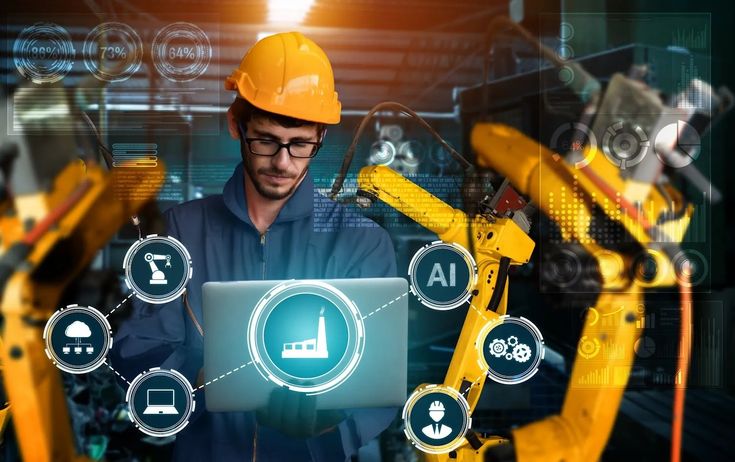
In 2026, 41,000 robotic units represent the largest deployment vertical and have been noted as the most adopted technology sector. Logistics and warehousing are experiencing the most rapid adoption due to the growth of e-commerce, labor challenges surrounding fulfillment centers, and the cost advantages resulting from the adoption of technology that enables operations to run continuously.
For many of the same reasons, e-grocery is experiencing renewed growth, post- pandemic, with an annual growth rate of 30-50%. In addition, the recent development of new, high-throughput robotic systems that have lower price points has resulted in the first commercially viable micro-fulfillment centers.
Semiconductor Manufacturing: Precision at Scale
With 22,500 units deployed, the 2026 robotics vertical second largest deployment is in semiconductor manufacturing. Manufacturing semiconductors requires the precision and expanding capability of robotic systems to operate at the physical limits of modern systems. Government investments in semiconductors in the US and the EU will only serve to further increase demand for robotics in newly constructed facilities.
Food Service: Automation Takes Off
Food service is expected to grow faster than any other sector in 2026, increasing 61% year-over-year, with 8,200 new deployments and 340+ robotic quick-service restaurant (QSR) systems. Continuous staffing shortages and high turnover, increasing minimum wages, and favorable robotic economics have combined to create an extremely compelling business case for the first scalable food service automation.
Healthcare: The Early Automation Leader
For the first time in 2026, healthcare robotics crosses the 1,000-unit deployment mark. Although this is early compared to food service, the growth is clear. Robotics and automation for task assistance, medication dispensing, patient transport, and lab work are experiencing strong demand for deployment. Labor shortages are most critical in healthcare, and this will create even greater demand to automate.
Agriculture: A Global Necessity
Robotics to automate construction and crop harvesting is revolutionizing agriculture. From the previously experimental to now actively and widely utilized, systems for autonomous harvesting, precision spraying, crop monitoring, soil analysis, and aerial surveying are rapidly being deployed. With labor in agriculture being particularly difficult to recruit and global food security being endlessly challenged, automation of agriculture is now a necessity.
Part 3: Post-Robotic Challenges
The robotic revolution is underway and gaining unstoppable momentum. However, it would be completely neglectful to not discuss the challenges between today’s amazing growth and full automation.
Safety, Liability, and Regulations
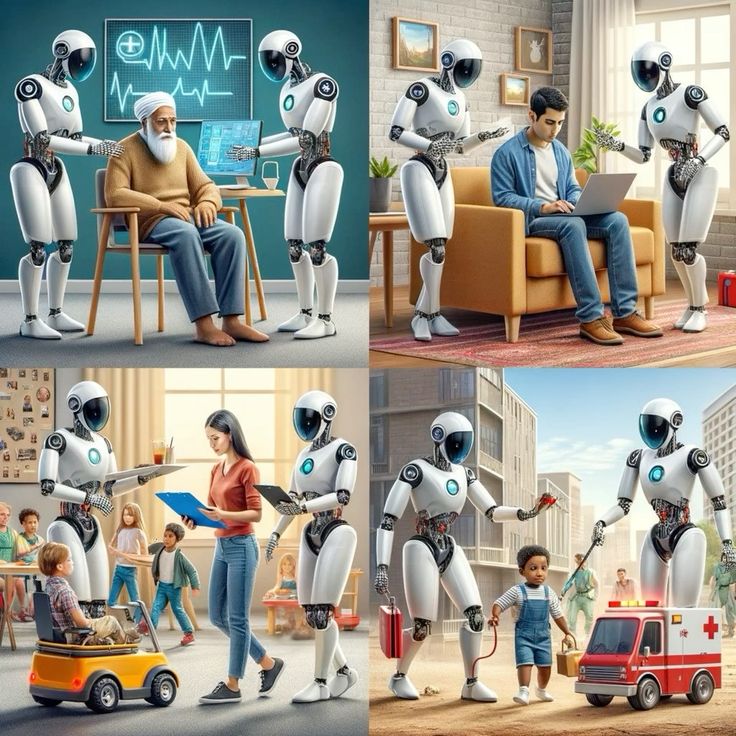
With more robots working near people, a greater focus is needed regarding safety, liability, and regulation. The safety concerns around modern, autonomous robots, especially humanoid robots, pose new challenges that testing and validation frameworks struggle to address. The IFR reports that with new versions of ISO 10218 and ANSI standards, safety will move away from defining safety by what type of robot it is, but what the robot will do as part of its application. This is a much needed evolution, but remains a work in progress.
The deep learning models used in robotics are often ‘black boxes’ — capable of yielding results, but without any clear explanation, even to the person who built the model. Who will be held liable when a robot makes a decision that harms a person? Solving this legal and ethical uncertainty will be one of the greatest challenges to governance in the coming decade.
The Skills Shortage
The introduction of robotics has created a labor market that is in need of a new type of employee; one who is able to work with robotic systems and is able to deploy, maintain, troubleshoot, and optimize them. This labor market is in high demand, as employers in manufacturing, logistics, and even healthcare are struggling to employ people with the necessary and adequate skills.
Data Privacy and Cybersecurity
Modern robots can hold vast amounts of collected data like video, audio, sensor, and behavior data, including biometric data. Privacy concerns are significant as complex and interconnected systems evolve. Rapidai360 observes a convergence of concerns on the expanded threats to cybersecurity from the increasing integration of cloud-connected and AI-empowered robotics in industrial processes.
The Geopolitical Technology Divide

A separation in robotics systems between US-aligned and China-aligned ecosystems is slowly consolidating. In operational robotics, China dominates, holding more than half of global robotic systems. The US has the lead in venture capital, AI, and foundation models. The splitting of ecosystems will increase costs and risks while making supply chains more complex for those entities operating in both ecosystems.
The Verdict: Robotics in 2026 Is No Longer the Future — It’s the Present
The State of Robotics 2026 report from Silicon Valley’s Robotics Center offers this moment’s key insight: looking back at 2026 will be critical for some companies not because they focused on the latest hardware. Instead, they will have focused on the development of routine and systematic data collection and deployment, as well as considerable depth in the given domains.
All industries must now focus on the question of “how can we deploy this in a large-scale and sustainable manner.” The time is right, the technology is proven, and the economic justification is clear. The competitive environments are more urgent.
The AI in robotics market, valued at $20.4 billion in 2025, is expected to grow to $182.7 billion by 2033, at a CAGR of 32%. This is a projection not based on speculation, but on the adoption curves that have already begun for many industries.
For every business leader, technologist and innovator reading this, the question is not ‘will robotics impact my industry?’ the answer is yes. The question is, are you proactively positioning your organization with the necessary resources, partnerships and strategies to lead and guide this impact — or passively waiting to respond to it?
At Rapidai360, we are perfectly positioned to help your business capitalize on the convergence of artificial intelligence, automation and intelligence gained from actual deployments. We help businesses avoid the distractions and the hype, understand the robotics environment, recognize the automation opportunities, and develop the strategies to make effective deployments.
Whether you are making your first venture into business robotics, are in the process of expanding an automation program or are building the AI infrastructure to support advanced robotics — we are here to help you with our intelligence platform and expert network.
The robots are here. The question is what you build with them.
FAQ
1. What are the biggest robotics trends in 2026?
The biggest robotics trends in 2026 include AI-powered autonomous robots, collaborative robots (cobots), humanoid robots, warehouse automation, healthcare robotics, agricultural robots, and edge AI integration for real-time decision-making.
2. How is artificial intelligence transforming robotics in 2026?
Artificial intelligence enables robots to learn from data, recognize objects, understand natural language, make autonomous decisions, and perform complex tasks with greater accuracy, efficiency, and adaptability than ever before.
3. Which industries are adopting robotics the fastest in 2026?
Manufacturing, healthcare, logistics, retail, agriculture, construction, defense, hospitality, and autonomous transportation are among the fastest-growing sectors adopting robotics to improve productivity, safety, and operational efficiency.
4. What skills are required for a career in robotics in 2026?
Professionals should develop skills in AI, machine learning, robotics programming (Python/C++), computer vision, ROS (Robot Operating System), IoT, embedded systems, automation, and data analytics to succeed in the robotics industry.
5. What is the future of robotics beyond 2026?
The future of robotics includes more intelligent humanoid assistants, AI-powered industrial automation, autonomous delivery systems, smart healthcare robots, space exploration robots, and seamless human-robot collaboration across workplaces and daily life.