Introduction
The need for enhanced cybersecurity has been recognized globally by all sectors – private, public, educational and individual. After the rapid changes caused by the digital transformation, it was found that cybercriminals continuously improve and develop new malicious programs and that traditional methods of cybercrimes prevention and detection, fall short.
Cybercriminals no longer work in the dark. In 2026, thanks to artificial intelligence, organizations will be able to detect cyber threats and respond to them more effectively and in less time. Organizations will be able to predict potential cyber threats. Furthermore, AI will change the ways organizations secure sensitive information and networks.
AI continues to evolve with the rapid development of malicious programs, and consequently, is a vital part of any modern cybersecurity plan. Organizations that use AI-based security mechanisms will be able to better protect their information.
The following describes how AI is improving cybersecurity with new technologies and its future with new potential.
Understanding AI in Cybersecurity

Artificial Intelligence (AI) is the term applied to computer systems which can be programmed to “think” and perform tasks, such as learning, solving problems and making decisions.
Security teams can benefit from AI’s ability to:
Detect suspicious activity
Identify malware
Monitor network traffic
Predict cyber threats
Automate security operations
Improve incident response
Unlike traditional security systems, which depend on a set of rules, AI systems learn from data and adjust to changing threats.
This capacity makes AI especially powerful against multifaceted, contemporary cyberattacks that are designed to outmaneuver traditional security.
Concerns with Traditional Cybersecurity
Cyber threats are more complex now than ever before.
Some of the adversities faced include:
- Ransomware
- Phishing
- Data Loss
- Internal Employees
- Cloud Security
- Advanced Threats
- Zero-Day
Most traditional security tools are reliant on the knowledge of attacks.
Because cybercriminals modify their attacks, detection that relies on known attacks increasingly becomes ineffective.
AI can solve this by detection of unusual behavior and threats that have never been encountered.
One example of why AI is revolutionary and, of utmost importance, is the shift from reactive security to proactive.
Threat Detection with AI
One of the biggest impacts of AI on Cybersecurity is threat detection.
Today’s technology allows networks to produce massive amounts of data every second.
Human analysts are simply unable to view security logs, alerts, and activities on a network in their entirety.
AI is capable of:
- Viewing millions of events simultaneously
- Recognizing behavior that is out of the norm
- Noticing anomalies
- Assessing threat levels
- Creating/ensuring a significantly reduced quantity of false-positive threats
An example of this may be that if an employee begins to access certain sensitive files at odd hours from a different location, the action could be flagged by AI as malicious.
This significantly reduces the potential for a data breach.
Machine Learning and Cybersecurity
A major piece of the role of AI in modern Cybersecurity is attributed to Machine Learning (ML).
Machine learning offers the opportunity for algorithms to detect patterns from data over time.
Some Applications include:
Malware Detection
Antivirus software utilizes learned signatures to identify malware.
Software that employs machine learning can detect malware through analysis of its behavior. This offers the capability to detect unknown malware.
Phishing Prevention
AI-powered email security solutions analyze the behavior of the sender, the style of the email, the links and attachments. This allows for the detection of phishing attempts before it reaches the user.
Fraud Detection
Machine learning is used to analyze the behavior of financial transactions and helps to identify and mitigate fraud in real time.
Advances in Predictive Cybersecurity
The most exciting evolution of cybersecurity is the advancement of predictive threat intelligence. AI gives the ability to predict the likelihood of an attack, instead of waiting.
AI can interpret the analysis of prior attacks, the behaviors of hackers, the dark web, and threat intelligence. This assists in identifying areas that are vulnerable and gives the ability to fortify the defense.
The predictive ability of cybersecurity is transforming the field from a reactive defense to a proactive fortification.
Automated Incident Response
The need for a rapid response to a cyber attack is understood. Damage can be incurred from a delayed response.
AI systems can respond faster than a human by several orders of magnitude. It can be used to isolate an attack, block devices that are compromising security, terminate sessions, and initiate a defense.
This is especially useful in a ransomware attack.
AI and Ransomware Defense

In 2026, ransomware is still one of the strongest cybersecurity threats.
Cybercriminals are still able to quickly encrypt all the data an organization possesses and demand a price to have the data restored.
Relentlessly, AI continues to defend against ransomware via:
Behavioral Analysis
AI is able to analyze file encryption activities and determine if they are suspicious.
Early Detection
Uncharacteristic behavior of a system is detected and monitored before the spread of ransomware.
Automated Containment
AI rapidly quarantines the infected system.
Recovery Assistance
AI helps organizations enhance the recovery processes and decrease the recovery time.
With the evolving threat of sophisticated ransomware, the necessity for AI defense systems is increasing.
Enhancing Cloud Security with AI
The rapid increase in cloud adoption is staggering.
The increasing amount of data in the cloud leads to new challenges when it comes to securing data.
AI strengthens cloud security via:
- Monitoring user behavior
- Detecting unauthorized access
- Identifying misconfigurations
- Protecting cloud workloads
- Preventing data leaks
In a multi-cloud environment, organizations depend largely on AI to see and secure the most complicated technology.
AI in Identity and Access Management
The increased globalization of technology has lead to an increased attack vector on the privileged.
Additionally, phishing and social engineering attacks have lead to a greater theft of user credentials.
AI helps to protect one’s identity via:
- Analyzing the patterns of logins
- Detecting compromised accounts
- Supporting multifactor authentication
- Monitoring user behavior
- Maintaining access control
AI Behavioral biometrics can even go a step further by recognizing users through analyze their typing pattern, their mouse movement, and their device usage.
This technology can improve security drastically when introduced to already existing systems.
Fighting Insider Threats with AI
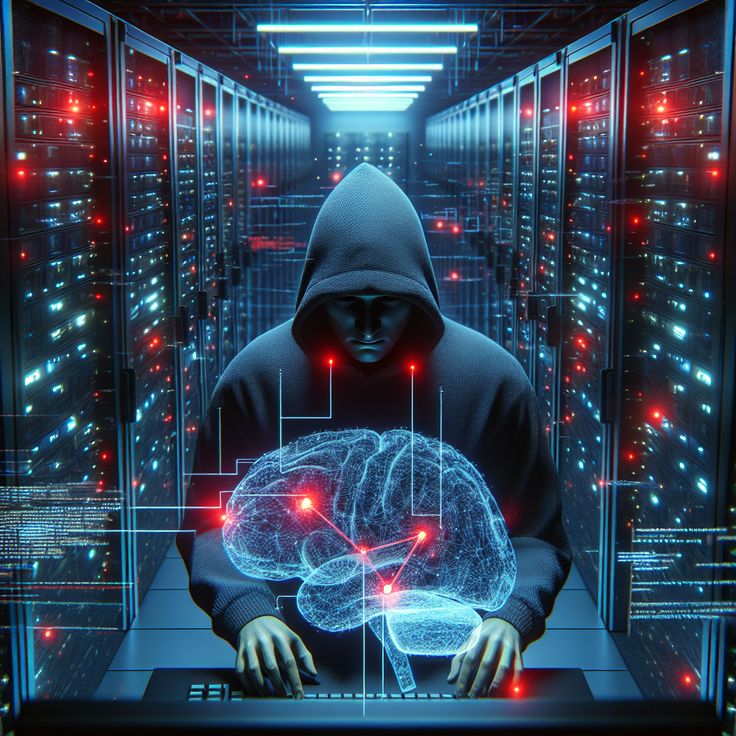
In cybersecurity, defense mechanisms should not only focus on external threats.
Security can be jeopardized both inadvertently and intentionally by employees, contractors and partners.
AI aids in the detection of insider threats in the following ways:
- User Behavior Analytics
- Activity Monitoring
- Risk Scoring
- Access Pattern Analysis
AI enables organizations to monitor user behavior for identifying activities that deviate from the norm.
Such features are of great use to organizations that deal with classified data.
AI Automated Security Operations Centers (SOC)
Security Operations Centers are the first security teams that respond to security issues.
Most modern SOC teams experience alert fatigue due to the overwhelming number of security alerts.
AI is beneficial to a SOC due to:
- Elimination of False Alerts
- Prioritization of Threats
- Full Automation of Investigations
- Speed of Response
- Augmented Decision Support
Automated tasks allow cybersecurity professionals to focus on threats.
Disadvantages of AI in Cybersecurity
Like most technologies, the use of AI in Cybersecurity does have its challenges.
AI in Cyber Crime

Cyber Crime has advanced because of the use of AI in the following ways:
- AI Based and Generated Phishing Emails
- Deep Fake Scams
- Automated Malware
- Botnets with AI
Infringement of Data Privacy
AI in systems has extensive data requirements.
Since the data must be classified, companies must be compliant with data privacy laws.
False Alerts
AI does help reduce the burden of false alerts, but not completely.
Continuous training and optimization are required.
Lack of Skilled Workers
A rare skill that is required for the use of AI in the protection of networks is knowledge of both AI and Cybersecurity.
The Future of AI in Cybersecurity
The ever-increasing use of AI will be seen in the field of Cybersecurity.
Some trends worth noting are:
- Self-operating security systems
- Automated AI threat detection
- Anticipatory risk management
- Quantum threat resilient security
- Sophisticated behavior analytics
- Security orchestration automation
Within a decade, specialists foresee pervasive incorporation of AI in all cybersecurity frameworks.
Companies incorporating AI security measures now will be ahead of potential security threats.
Conclusion
2026 will showcase the groundbreaking impact of AI in the field of cybersecurity. Threats to security are becoming more advanced, and businesses need more sophisticated security systems that can identify and thwart attacks in real time.
AI-based systems provide advanced detection of threats, automation of security incidents, a more secure cloud infrastructure, and advanced protection from ransomware, phishing, and insider threats.
The advantages of AI integration into cybersecurity far outweigh the challenges. Entities that implement AI security frameworks will be positioned to safeguard their critical data in a secure environment.
The landscape of cybersecurity will be intelligent, as opposed to automated. The vanguard of that intelligent revolution will be AI.
FAQs
- What does AI in Cybersecurity mean?
AI in cybersecurity refers to the ability to deploy AI systems that can identify and thwart cyber attacks autonomously.
- In what way does AI enhance detection of security threats?
AI systems have the capability to process and analyze large data sets in real time, identify abnormalities, and ultimately detect threats with a higher degree of accuracy.
- How can AI prevent ransomware?
AI has the capability to recognize ransomware activity, quarantine impacted systems, and automate response measures to limit loss.
- How is machine learning implemented in cybersecurity?
Machine learning is able to identify patterns, notice anomalous behavior, and enhance security framework with its adaptive learning.
- Will AI dominate the future of cybersecurity?
Yes. AI will be an integral part of modern cybersecurity schemes since it can offer automation and improved protective measures against risks.