Introduction
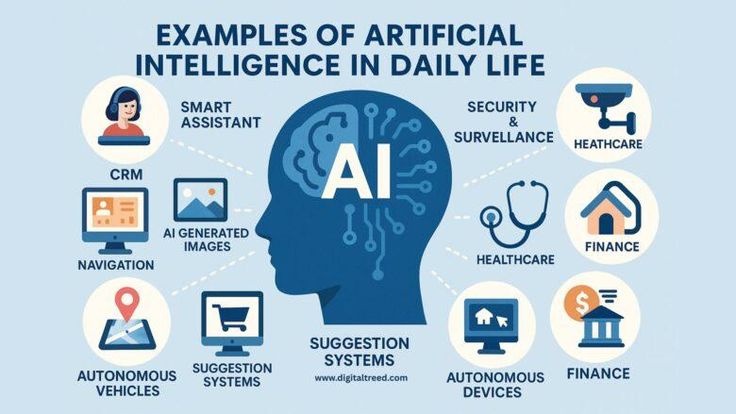
Machine Learning (ML) is part of rapidly advancing technology and modern Artificial Intelligence (AI) systems. ML is integral to Netflix recommendations, Google searches, self-driving cars, and virtual assistants- many systems are powered by ML.
The adoption of AI means that the demand for ML professionals will continue to grow. Those who learn ML will find careers in AI, Data Science, Robotics, Cybersecurity, and Software Development more accessible.
The path to ML is not clear to many. Some beginners will ask if they need to know how to code, if coding is a must, how long does it take to be a Machine Learning Engineer, and so on.
This useful Machine Learning Course Roadmap will help students, with no prior knowledge, learn and be ready for the industry by 2026.
Why Students Should Learn Machine Learning in 2026
ML is influencing every industry. Healthcare, finance, education, agriculture, manufacturing, and e-commerce are continuously transformed by ML.
The most compelling reasons to learn ML are:
– ML-based careers are in demand
– New jobs will use ML
– Good pay
– ML careers will have better prospects down the line
– ML grads will have access to interesting work
– There are ways to make your own inventions
– ML grads will be able to work with AI, Robotics, and Data Science
Spend money on ML. Most companies are buying into AI, so ML is one of the most useful things students can learn.
Learning About Machine Learning
Machine Learning is a subdivision of Artificial Intelligence with the ability to teach computers how to recognize patterns within data and how to optimize performance without needing to be explicitly told.
Machine Learning tends to be a more autonomous system than classical coding, as it predicts outcomes based on the patterns it has discerned.
Examples of this include:
– Spam filters
– Recommendation algorithms
– Facial recognition
– Chat interfaces
– Fraudulent behavior recognition
– Diagnostic tools
Machine Learning offers a variety of tools that have the ability to highly influence society and the real world.
Step 1: Python Proficiency
The most crucial step in the majority of Machine Learning Course Roadmaps is learning the Python language.
The most popular programming language within AI and Machine Learning is Python because it is:
– Simple and easy to learn
– Highly flexible
– Supported with strong Library
Concepts that are imperative to Python:
Variables and Data Types
Manipulating data.
Loops and Conditions
Understanding the flow of the program.
Functions
Writing reusable code.
Lists, Tuples and Dictionaries
Managing collections of data.
Object Oriented Programming
Building and structuring code to manage larger applications.
Exception Handling
Error control.
Libraries that are frequently used include:
– NumPy
– Pandas
– Matplotlib
– Seaborn
– Scikit-learn
Before progressing, students should invest 4-6 weeks developing basic Python skills.
Step 2: Strengthening Math Knowledge

Mathematics is the foundation of Machine Learning.
Understanding advanced mathematics is not required for this course, but the following are good starting points:
Statistics
Study these concepts:
– Mean
– Median
– Mode
– Variance
– Standard Deviation
– Probability
Linear Algebra
Study these concepts:
– Matrices
– Vectors
– Matrix Operations
Calculus
Study these concepts:
– Derivatives
– Gradients
– Optimization
Learning these topics helps students understand the internal functions of Machine Learning Algorithms.
Step 3: Learn Data Analysis and Visualization
Data fuels Machine Learning.
Before students can create models, they must learn the collection, cleansing, and analysis of data.
Important skills:
– Data Cleaning
– Data Transformation
– Exploratory Data Analysis (EDA)
– Feature Engineering
Helpful tools:
– Pandas
– NumPy
– MatplotLib
– Power BI
– Tableau
Visualization can reveal patterns and insights that data may conceal.
Visualization is important in EDA.
Step 4: Understand Machine Learning Fundamentals
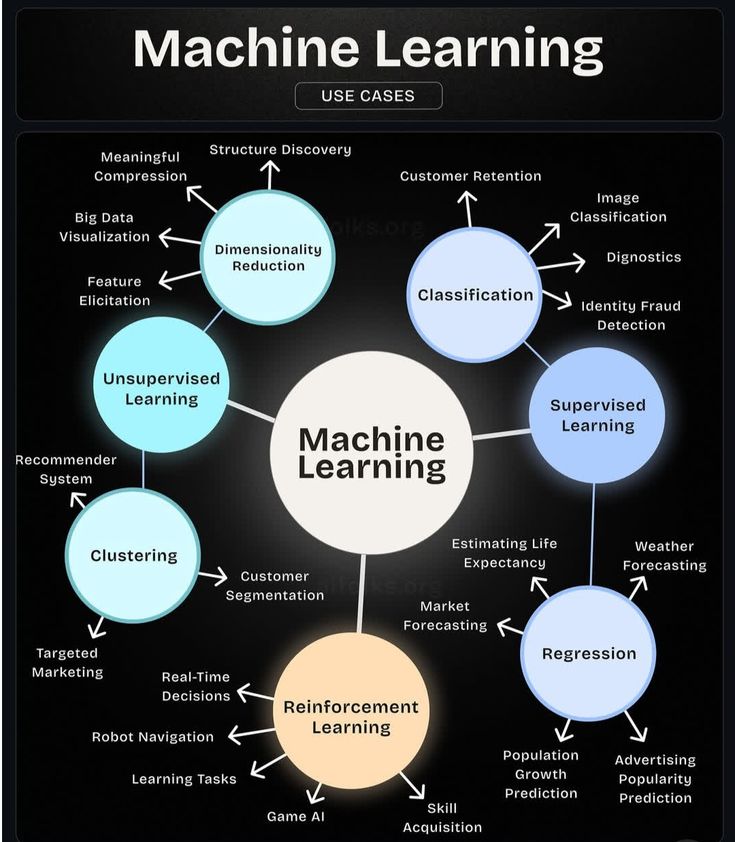
Students can begin learning the fundamentals of Machine Learning.
Supervised Learning
Data is taught as a set of examples contained in labels.
Some examples include:
– Predicting House Prices
– Spam Detection
– Predicting Student Performance
Common Algorithms include:
– Linear Regression
– Logistic Regression
– Decision Trees
– Random Forest
Unsupervised Learning
Patterns are taught in data with no provided labels.
Some examples include:
– Customer Segmentation
– Market Basket Analysis
Common Algorithms include:
– K-Means Clustering
– Hierarchical Clustering
Reinforcement Learning
Learning occurs through rewards and punishments.
Some applications include:
– Robotics
– Self Driving Cars
– Game AI
Step 5: Learn the Most Commonly Used Machine Learning Algorithms
Students should learn these algorithms through practice:
Linear Regression
Use this to predict numerical values.
Logistic Regression
Use this for classification tasks.
Understanding Algorithms
Algorithms are a fundamental part of machine learning that require the skills to select the optimal algorithm for the scenario.
Decision Trees
An algorithm that is simple and concise.
Random Forest
Uses various trees in order to improve prediction.
Support Vector Machines (SVM)
A more complex algorithm that solves more complex predictions.
K-Nearest Neighbors (KNN)
Good for recognition of patterns.
Naive Bayes
Used often to filter spam.
Gradient Boosting
Common in business use cases.
Step 6: Work on Real-World Machine Learning Projects
As you build projects, the theoretical knowledge you have is put into practice and becomes real experience.
Some projects for beginners include:
– Predicting House Prices
– Analyzing Student Performance
– Predicting Sales
– Making a Movie Recommendation System
Some projects to try that are of an intermediate level include:
– Analyzing Sentiment
– Detecting Fake News
– Predicting Customer Churn
The most advanced projects are:
– Building a Chatbot
– Building a System for Recognizing Images
– Machine Learning for Medical Diagnosis
– Building a Recommendation System
Having many different and challenging projects in your portfolio increases your chances of getting a job.
Step 7: Learn Deep Learning
Deep learning is an advanced branch in machine learning.
Deep Learning employs the use of frameworks such as:
– TensorFlow
– Keras
– PyTorch
And deals with:
– Neural Networks
– CNN
– RNN
– Transformers
– Generative AI
Deep Learning makes possible technologies such as ChatGPT, image recognition, and speech assistants.
Step 8: Explore Artificial Intelligence and Generative AI
As a machine learning practitioner, you should familiarize yourself with:
– NLP
– Computer Vision
– Generative AI
– Prompt Engineering
– LLMs
These will be the technology fundamentals that most AI related careers will be based on.
Step 9: Build an Industry-Ready Portfolio
Practical experience is what employers are looking for.
A strong portfolio includes:
GitHub Projects
Case Studies
Kaggle Competitions
Research Work
Certifications
A strong portfolio shows a candidate’s ability to solve real-world problems.
A strong portfolio includes five key elements. The first is …
Step 10: Get Your Certifications
Take the following certification courses.
Machine Learning Specialization
AI Fundamentals
Data Science Certifications
Python Programming Certifications
Deep Learning Certifications
Certifications show that you have the skills and increase your chances of getting hired.
What Can You Do With Machine Learning Skills?
You can be hired for positions such as:
Machine Learning Engineer
Data Scientist
AI Engineer
Data Analyst
Business Intelligence Analyst
Robotics Engineer
Computer Vision Engineer
NLP Engineer
Machine Learning Specialists are among the highest-paid tech specialists.
How RapidAI360 Helps You Learn Machine Learning
RapidAI360 has designed its training programs with students and the industry in mind. Students learn Machine Learning, Artificial Intelligence, Robotics and Cybersecurity at a practical level.
Students benefit from:
Practical Projects
Specialists as Teachers
Working Skills
Guided Careers
Skills that can be used in the Field
RapidAI360 shows students what they need to know in order to be hired.
Conclusion
Keeping up with the changing landscape of technology means that every working professional will benefit from learning the basics of Machine Learning. This step-by-step Machine Learning Course Roadmap helps students learn how to program, study mathematics and data, learn Machine Learning, and AI.
Consistency is vital for success. You should learn incrementally with a focus on project work. Start learning now and be ahead of the rest for the future job market.
Frequently Asked Questions
1. Can a beginner learn Machine Learning?
Sure. Learning from Python coding, you can move on to learn the math, data analysis, and Machine Learning.
2. How long will it take to learn Machine Learning?
Learning Machine Learning with consistency can take about 6–12 months.
3. Is coding required to do Machine Learning?
Definitely. Python is the most popular language for Machine Learning.
4. What is the best coding language for Machine Learning?
Because of its ease of use and rich AI libraries, Python is the favorite.
5. What are some good Machine Learning projects for students?
Great ideas for projects are predicting house prices, performing sentiment analysis, recommendation systems, chatbots, and image recognition.
6. Will Machine Learning be a good career in 2026?
Machine Learning will continue to be one of the highest paying and in demand skill based, technology careers in the world.
7. What is the difference between AI and Machine Learning?
AI is the big picture of smart systems, while Machine Learning is an aspect of AI for making systems learn from data.
8. Can students learn Machine Learning?
Yes. Students can learn the basics of Machine Learning with the use of beginner tools and some instruction.