Introduction
In less than a decade, AI has made its mark as one of the most impactful technologies. In 2026, the evolution of AI continues to disrupt and redefine how entire industries function, how companies conduct business, and how consumers and the rest of the world engage with products and services. AI is breaking barriers through innovation, with everything from smart chatbots and autonomous tools to advanced solutions in healthcare and cybersecurity.
In 2026, we see the emergence of disruptive technology through the rapid proliferation of AI and the subsequent discussions around its ethics, regulation, and impact on the workforce. AI is now the focus of major organizational investments.
The aim of this article is to highlight the current status of AI, the various trends and challenges encountered in the realm of applications, and the potential opportunities in 2026.
What Is AI?
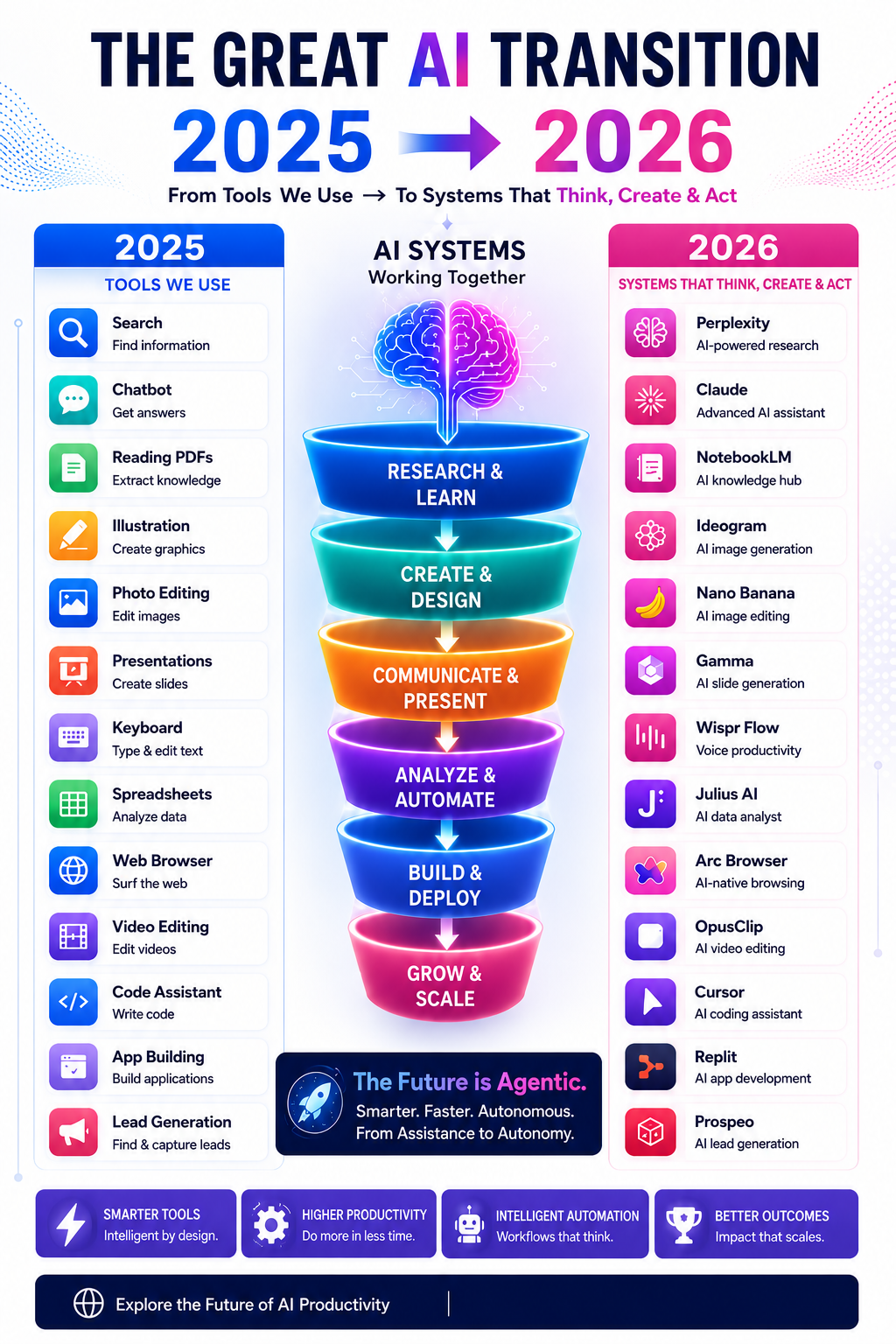
AI is the ability of a computer or machine to simulate the human ability to think and reason. AI, in a sense, is the ability of a machine to carry out functions that are normally considered to require intelligence. These functions include:
- The ability to learn
- The ability to solve problems
- The ability to make predictions
- The ability to reason
- The ability to comprehend language
- The ability to perceive visual information
Artificial intelligence is the culmination of the integration of several technologies. Among them are machine learning, deep learning, natural language processing, computer vision, and robotics.
The Present State of AI in 2026
The AI industry is now in a phase where we can see its clear adoption and implementation. Implementation is no longer restricted to trials.
The prominent features of AI in 2026 are:
- Widespread adoption at workplaces
- Sophisticated AI agents
- Explosive growth in generative AI
- Automation through AI
- AI regulations are more robust
- More and better AI infrastructures
- Multimodal AI is more common
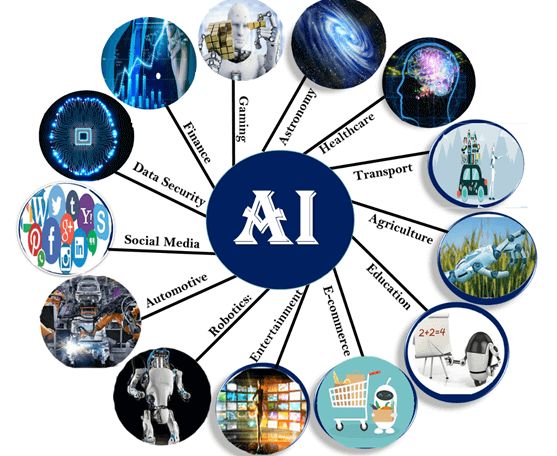
AI is no longer dominated by tech companies. It is now used in healthcare, finance, education, manufacturing, retail, transportation, agriculture, and government systems.
AI Trends to Watch in 2026
1. AI Agents and Systems with More Autonomy
2026 is likely to be the year of the AI agent.
Compared to chatbots, AI agents are more autonomous in that they are able to:
- do tasks on their own
- analyze and make decisions
- create and manage workflows
- run a business process
AI agents are being adopted by companies to manage customer support, as well as for project management, software development, and business operations.
2. Growth of Generative AI
Of AI technologies, Generative AI may be the most important technology of 2026. Its applications are:
- creation of any text or content
- design of graphics
- generation of videos
- campaigns for marketing
- assistance in coding
- creation of teaching aids
Generative AI is used by companies to shorten the time they spend on a task, all the while decreasing operational costs and improving efficiency.
3. Multimodal AI Systems
Multimodal AI Systems are capable of processing more than one type of information at a time, such as:
- Text
- Images
- Audio
- Video
- Documents
With these systems, AI becomes more accurate and contextual, and as such, the possibilities of its applications across various industries are endless.
4. AI-Enhanced Automation
Automation is becoming smarter with the incorporation of AI.
Businesses are automating:
- Customer Service
- Data Entry
- Inventory Management
- Lead Generation
- Sales
- HR Processes
AI automation is better at automation and provides the opportunity for employees to work on more meaningful processes.
5. Edge AI
Edge AI is the processing of data on a device rather than being processed in the cloud.
Some advantages include:
- Accelerated Performance
- Enhanced Privacy
- Less Latency
- Less Bandwidth
Edge AI is becoming more common in smart phones, IoT devices, self-driving cars, and factory systems.
Major Use Cases of Artificial Intelligence by 2026
AI in Healthcare
AI continues to have one of the greatest impacts on Healthcare.
Some Use Cases include:
- Diagnosis
- Medical Imaging
- Discovery
- Virtual Health Assistants
- Tailored Health Plans
AI in Healthcare Improves the experience of both the practitioner and the patient.
AI in Education
AI is being used in educational institutions.
Some Benefits include:
- Customized Learning
- Adaptive Learning Systems
- Grading Automation
- Learning Analytics
- Virtual Learning
AI has the potential to improve teaching and learning.
AI in Cybersecurity
With the sophistication of Cybersecurity threats, the use of AI in Cybersecurity has become a necessity.
The incorporation of AI systems within cybersecurity has the potential to:
- Identify threats in the present
- Evaluate abnormal behaviors
- Avoid attacks on cyber security
- Optimize the reaction to incidents
It has become more common for companies to use AI in the protection of their infrastructure.
AI in Digital Marketing
The uses of AI in digital marketing are many and varied, including:
- Improving the effectiveness of searches
- Creating content
- Classifying customers
- Using data to make future predictions
- Improving the effectiveness of advertising campaigns
The implementation of AI improves marketing and advertising returns.
AI in Finance
The financial sector uses AI for:
- Identifying fraud
- Evaluating risk
- Determining credit worthiness
- Making decisions on trades
- Supporting customers
The employment of AI improves both the speed and accuracy of determinations in finance.
AI in Manufacturing
AI is used in manufacturing to enhance productivity by:
- Predicting when problems will occur
- Controlling quality
- Optimizing the supply chain
- Automating using robotics
AI has a positive impact on both efficiency and productivity with a reduction in costs.
Challenges Facing AI in 2026
AI, despite its growth, faces many significant challenges.
1. Data Privacy Concerns
AI systems require substantial amounts of data. Concerns over AI include the protection of users’ data and privacy and the security of regulated data.
It is the responsibility of companies to protect the data.
2. AI Bias and Fairness
The potential negative outcomes of biased AI systems include:
- Discriminating against protected classes
- Making unfair decisions
- Producing unreliable results
A transparent system of AI resolves bias and fairness issues.
3. Regulatory Challenges
AI is becoming the focus of regulation on a global level.
Navigating:
- Requirements
- Standards
- Guidelines
makes balancing innovation against regulation a major challenge.
4. High Implementation Costs
To implement advanced AI systems, organizations need to build their:
- Infrastructures
- Skilled Workforce
- Maintenance Support
Many small organizations may not be able to afford the costs to implement AI.
5. Workforce Transformation
AI is causing the transformation of job roles in all sectors.
Some of these transformations present the following challenges:
- Shortage of workforce
- Adaptation of workforce to AI
- Reskilling of employees
To transform their workplace to AI, organizations need to do a lot of training.
Advantages of Artificial Intelligence
The many advantages of AI are causing explosive growth.
Increased Productivity
AI improves the working productivity of employees by automating mundane and repetitive tasks.
Improved Decision-Making
AI makes informed decision-making possible by analyzing data comprehensively.
Cost Saving
AI systems are a good investment that pay off in efficiencies in operations.
Improved Customer Experience
AI tailored to individual customers improves satisfaction and loyalty.
Accelerated Innovation
AI systems empower organizations to rapidly build and launch new ideas.
Future Potential of AI
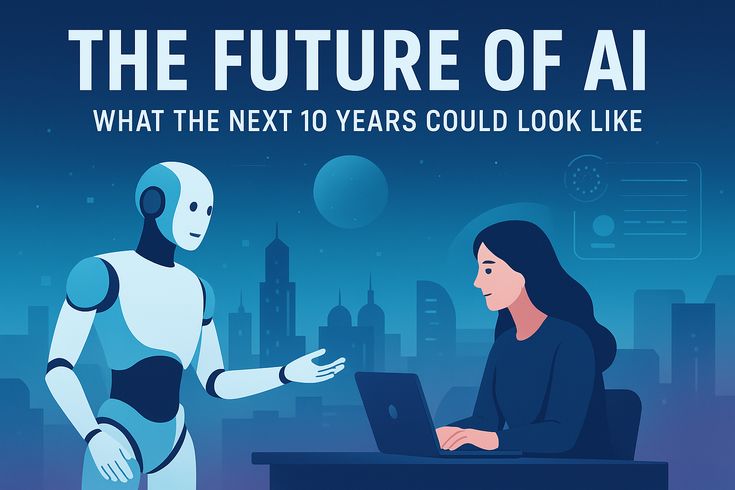
There is vast untapped potential that AI will reveal in the future.
Predicting the Future of AI Technologies
AI-driven innovations are anticipated to include:
- Cutting-edge healthcare technologies
- Potential for more precise predictive algorithms
- Automation-enhanced surgery
Smart Technology
AI will further develop:
- Intelligent algorithms to adjust traffic patterns
- Smarter energy systems
- Safeguarding systems
- City design technologies
Advanced AI Robotics
Robots equipped with AI technology will become commonplace in:
- Factories
- Surgery
- Farming
- Freight systems
AI and Climate Change
AI will develop systems to reduce the carbon footprint with:
- Enhanced energy management systems
- Evolved climate models
- Better management systems for scarce resources
Customized Learning
AI will personalize education by tailoring learning modules to student deficiencies and strengths.
How Businesses Can Embrace the AI Future
To remain competitive, businesses must adopt a proactive stance. First, businesses must:
- Educate employees on the opportunities and challenges of AI.
- Develop long-term plans to build AI infrastructure.
- Commit to ethical considerations.
- Protect investments from external threats.
- Be flexible and accept the rapid changes of AI.
The Value of AI Skills for Career Advancement
The job market for AI-related careers will continue to thrive. Future careers will require proficiency in:
- Machine Learning
- Data Science
- Prompt Engineering
- Natural Language Processing
- Deep Learning
- Robotics
- Cybersecurity
Building a foundation of these skills now will create a career advantage.
Conclusion
The current global state of AI in 2026 shows AI’s relevance beyond necessity – rather, it’s a key component of global innovation. AI is permeating all sectors of the global economy and is redefining productivity and decision-making.
New revenue streams are all but guaranteed. However, new and emerging challenges of privacy, ethics, regulations, and AI-inflicted unemployment will accompany the new revenue streams. The firms that responsibly harness AI for profitability will likely enjoy sustained profitability.
AI and its future potential are still in their infancy. Once again, the scale of influence of AI on the future of civilization and the progress of humanity on both the micro and macro levels, is incalculable.
Frequently Asked Questions (FAQs)
1. What is the current state of AI in 2026?
AI in 2026 resembles the present in having highly advanced and pervasive AI agents, generative AI, and automation, with ever-deepening integration of AI across the many sectors of commerce, including healthcare, education, finance, and cybersecurity.
2. What are the biggest AI trends in 2026?
Key trends will be AI agents, generative AI, multimodal AI, edge AI, automation, and AI-based cybersecurity.
3. How is AI being used in businesses?
AI can be used in business for customer service, marketing, data analysis, process automation, and even cybersecurity.
4. What challenges does Artificial Intelligence face?
The primary challenges are data and privacy, AI bias, and ethics, along with the cost of implementation and the new regulator.
- Will jobs really be lost to AI?
Sure, some tasks will be taken over by machines, but new tasks and new types of jobs will emerge. Rather than focusing on job loss, the emphasis is on the collaboration between humans and machines.
- Which sectors have the most to gain from AI?
Because of AI, Healthcare, Education, Finance, Manufacturing, Retail, Cybersecurity, Transportation, and Digital Marketing are sectors that are benefiting the most.
- What are the most requisite skills to get AI jobs?
To get jobs in AI, it is important to know about Machine Learning, Data Science, Deep Learning, Python, Natural Language Processing, Prompt Engineering, and AI ethics.
- What does the future of AI look like?
We will see better AI agents, advanced robotics, specialized health care, smart educational systems, smart cities, and a deeper reach of AI into our everyday lives.