The Industry Has Already Changed — Have You?

The ability to build a REST API, deploy a React app, and manage a SQL database guaranteed a good job 5 years ago. Today, those skills ensure your resume is actually read.
There’s a new standard in the job market for engineering roles. Artificial Intelligence is here, and is embedded in every product, service, and system – and it has changed everything.
There’s machine learning powering everything. From your predicted arrival time on Google Maps, to your next recommended song on Spotify, to your bank’s fraud detection system. Those networked to the code, are being left behind.
WAKE-UP CALL
What companies mean when they say they want engineers who can work with AI is engineers who can build things with a clear understanding of how ML systems work, the data pipes, the drawbacks of ML, and how to ethically create products around those systems. This takes the fundamentals of ML and a beyond just coding.
Engineers who do not understand ML are at risk of being the new “code monkeys.” The new “code monkeys” are the ones who understand ML, and are optimizing, and creating systems, and leading teams to build the future.
Understanding fundamentals of machine learning does not mean aspiring engineers need to head back to school and earn their PhD. Most of the time, it means that engineers are creating a practical understanding of the ways machine learning systems think and learn and where their limitations lie.
Here’s what each of these looks like for the engineering context with machine learning for beginners:
– Labels or not? Filters vs. segmentation exercises. It will change how you think about how to design your data collection systems. Supervised vs. unsupervised learning:
– Every product with ML has to go through a diligent and thorough evaluation. Technical decisions are better because of the understanding of the concept of data splitting and overfitting. Training, validation, and test splits:
– Engineers who have this intuition will construct data pipelines and systems with a more thoughtful structure and will be able to identify data-related issues in the early stages of development. Feature engineering:
– Knowing when to evaluate a model using which of these metrics will focus thoroughly on which model will be more important to evaluate in a production system, versus a model that merely looks good. Evaluation metrics:
– Knowing about all of these things separates the engineers who are able to implement ML features from the engineers who are only able to prototype ML features. Challenges to ML deployment:
There’s plenty of room for reasoning and intuition, especially when you consider that all of this can be understood without a strong background in complex mathematics.
3. Precise Comparison Between ML Knowledge and Basic Coding
We can examine an example to demonstrate the difference between an engineer skilled only in coding, and an engineer skilled in coding and basic ML.
4. Why Coding Without ML Context Is Like Driving Without a Map
We can think of an analogy that every aspiring engineer can understand. You might be the best driver, but have no map, no GPS, and no knowledge of your destination. You might be able to handle the car with precision. But, how would you know when to turn? You could end up anywhere.
You’ll move fast. You’ll execute beautifully. But in which direction?
This is the future of coding without machine learning context. You can make code look nice and clean and build optimized APIs and databases. But if you don’t know why an ML system was built in that way, what an ML system is capable of and how the intelligent layer of all today’s products functions, then you are executing code with no direction.
REAL-WORLD EXAMPLE
An example of this is the engineer at a health care service startup who is trying to build a system to triage patients. She knows Python and Django, but she also has to understand other things. For example, why is a false negative more critical than a false positive? What exactly is class imbalance to the model and how do you avoid the model learning historical biases from the training data? These are all ML questions and the answers of these questions will dictate the engineering decisions.
All the problems that today’s engineering teams will be solving will be around intelligent systems. AI skills for engineers will be essential to build, maintain, troubleshoot and improve these systems and go beyond the ML syntax and structure.
5. The Communication Problem with Engineering Teams
Inside nearly all engineering teams is a problem that is almost never mentioned in blog posts and tutorials. This is the divide between programmers and data scientists.
Data Scientists have their models and loss functions. They have their lingo and jargon just like Software Engineers who have APIs, microservices, and deployments. If the gaps between the two worlds cannot be bridged, the resentment will increase. Projects will stall and product deliveries will be late or will not happen at all.
When aspirants in Engineering add even a basic knowledge of machine learning to their arsenal, they can be the bridges that close the gaps. Such people can:
– Explain business needs in a machine learning way for data scientists to work on.
– Understand the outputs of models enough to show them in proposed product interfaces.
– Understand rules-based and machine learning problem-solving paradigms enough to select the appropriate one.
– Proactively deal with quality and fairness concerns when the concerns are just theoretical and have not reached the product.
– Rather than only implementing the sub-tasks, take responsibility for the entire Machine Learning driven task in the final product.
Companies are looking for such people. Companies want potential team enhancers, not just people who can code at a high level. Literacy in machine learning is that sort of a differentiating skill.
6. The Career Ceiling You Haven’t Hit – But Will
Most engineering aspirants are understandably focused on one thing – getting their first job. The knowledge you add now will determine if you hit the career ceiling at 28 or if you are continuously adding value in your 30s and beyond.
The job market for engineers has two distinct pathways. The first is for engineers that specialize and excel in narrow and specific fields. The second is for engineers that can traverse the entire spectrum of sophisticated systems and intelligently make design and architectural decisions regarding the application and integration of AI, while also confidently leading technical teams through challenges and ambiguity.
The first pathway is secure and stable, but the second pathway is where the most significant opportunities and highest paying jobs will be, especially for engineers that can make the transition from software engineering to AI-enabled software engineering early in their careers.
CAREER DATA POINT
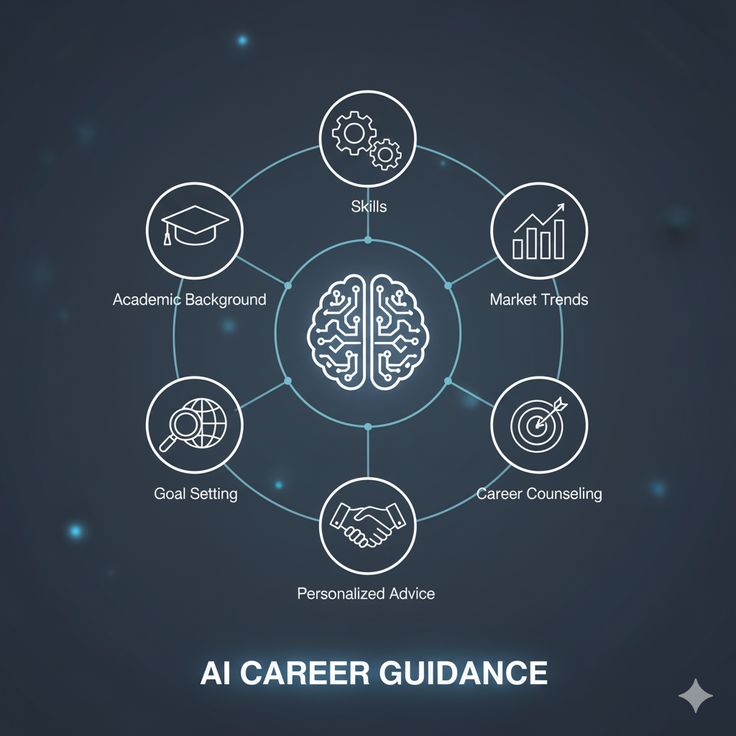
Engineers that hold senior positions and have practical knowledge of applied ML earn 25% to 40% more than their peers that hold the same positions and do not have that knowledge, according to several salary surveys for 2025. The discrepancy becomes greater as one progresses in their career.
Being able to combine the skills of a software developer with the knowledge of ML systems and software gives engineers the highest value of all in any engineering organization.
7. How to Build Your ML Foundation Without Losing Your Mind
If you’re even 50% convinced of the merit, this is a simple and non-overwhelming way to learn the fundamentals of machine learning as a not-so-distant engineer. This is not the learning path of a PhD, but the working professional’s way to ML literacy.
1.Before attempting to utilize a library or a dataset, dedicate yourself to two weeks of studying how real businesses apply machine learning. Netflix, Uber, LinkedIn, and the like, have accessible blogs where they break down the language of their machine learning systems. Put the math aside for a while, and build the intuition first, starting at the ‘why’ of the systems instead of the ‘how’.
2.Complete one of the following: Andrew Ng’s Machine Learning Specialization on Coursera, fast.ai’s Practical Deep Learning, or Google’s Machine Learning Crash Course. These options provide a baseline of the key principles and fundamentals of Machine Learning and its applications in roughly 4-6 weeks of consistent and dedicated effort, and are intended for those that have a basic understanding of programming.
3.Pick a public dataset from Kaggle, or the UCI Machine Learning Repository, and don’t attempt to win a competition. Focus on the data and its exploration, cleaning, and visualization. Fit a model. Nothing teaches you to work with data like tackling real world, messy data, and that task goes beyond any tutorial.
4.Whether the project that you are building a mini proof of concept around is an end-to-end sentiment classifier of product review data, a simple image classification project, or even a model that makes a prediction on the price of a house, make it real and do every stage of the process yourself, from data collection and cleaning, to training and testing a model and even a simple proof of concept.
5.Understand how to deploy machine learning models, and the concepts of MLOps, and how models drift over time, and methods to maintain ML systems. It’s important to learn what it means to monitor a deployed machine learning system by reading about ML in production systems. Most ML tutorials lack there.
6. As soon as you have a basic understanding of machine learning, incorporate that knowledge into your system design responses. Describe your approach for including a machine learning component in your architecture. This will demonstrate that you have the ability to think beyond the code and include intelligent systems in your design. Discuss your knowledge of machine learning in your interviews, even if the position you are applying for is a software engineering position.
8. The Responsible Engineer Argument
There is another area of focus regarding the AI skills of engineers that is unrelated to their career, and that is the area of ethics and responsibility. This area is far too often neglected.
Machine learning systems make problems that affect real people. Here are actual, real-world examples: people have credit applications approved or denied; people have job applications shortlisted or filtered out; people have medical diagnoses flagged or missed. Given the examples above, the systems can introduce bias, inequity, and cause real problems. These examples are the unintended consequences resulting from a lack of understanding on the part of the engineers regarding the system in their care.
When every engineer on a team knows the basics of machine learning, they can develop a greater understanding in a team environment and ask better and more critical questions such as:

– Will this training data represent the population that this data will interact with after this machine learning model has been deployed?
– What does it mean if the model is wrong, and how do we find out about it?
– Is there a real need for the complexity of a model here, or is it simply a fashionable choice?
– How do we relate the decisions the model will make to the people who will be impacted by this system?
Thinking about the impact of technical decisions on real people is now just as important for engineers as building great systems. You will not be able to have a successful engineering career if you do not have some understanding of machine learning. The students who are able to build a basic understanding of machine learning now will be doing themselves their careers and society a great service.
Conclusion:
The Basics of Coding Will Get You Into an Engineering Job, an Understanding of Machine Learning Will Ensure You Keep It.
Let’s return to the female graduate engineer with great coding skills who lost a job to an engineer with inferior coding skills, but a better understanding of machine learning. This is the future and not an isolated case. We can expect to see intelligent systems throughout all products and all industries, and the engineers who understand embedded systems will be at a competitive advantage.
The great news is that learning the basics of machine learning as an engineering student is totally achievable. There is no need for a doctorate in mathematics or for a career change away from software development. You need some curiosity and a willingness to learn within a framework, and of course, the discipline to build real applications beyond the tutorials.
Just start now. You will be more successful in five years than your peers who will be trying to solve the problem of why their ML feature is not performing well in production. They will be asking you for your expertise.
The engineers who can build and understand the machines will always be more useful than the engineers who can only operate the machines.
1: Why should engineering students learn Machine Learning basics even if they don’t want to become AI engineers?
Machine Learning is becoming a core technology across engineering fields, including software development, electronics, mechanical engineering, civil engineering, and robotics. Understanding the basics helps students solve real-world problems, work with intelligent systems, and stay competitive in an increasingly AI-driven job market.
2: Do I need advanced coding skills to start learning Machine Learning?
No. You don’t need to be an expert programmer to begin learning Machine Learning. A basic understanding of programming concepts (such as Python), mathematics, and logical thinking is enough to get started. As your knowledge grows, you can gradually learn more advanced algorithms and build practical ML projects.